THE PAST
Bílá hora (White Mountain)… a hillock west of Prague where white marlite used to be mined. There used to be only a road leading to Prague, nothing else. It was this road that travellers, merchants, messengers as well as armies would follow from the west to the city gate at Strahov. When this last obstacle had been overcome, a view of Prague opened up to comers. In winter it was the place where the snow came first of all the town and remained for the longest time…
The defenestration of the royal officials on 23 May 1618 leads to a revolt of the Estates, the Czech Estates refuse to recognise the rule of Ferdinand II of Habsburg and elect Prince Frederick of the Palatinate as king in 1619. On his way to Prague via Bílá Hora, he stops at the Royal Star Summer House (Hvězda) where he is greeted by representatives of the Estates and the inhabitants of Prague. However, his reign is short-lived…
The Battle
8. 11. 1620
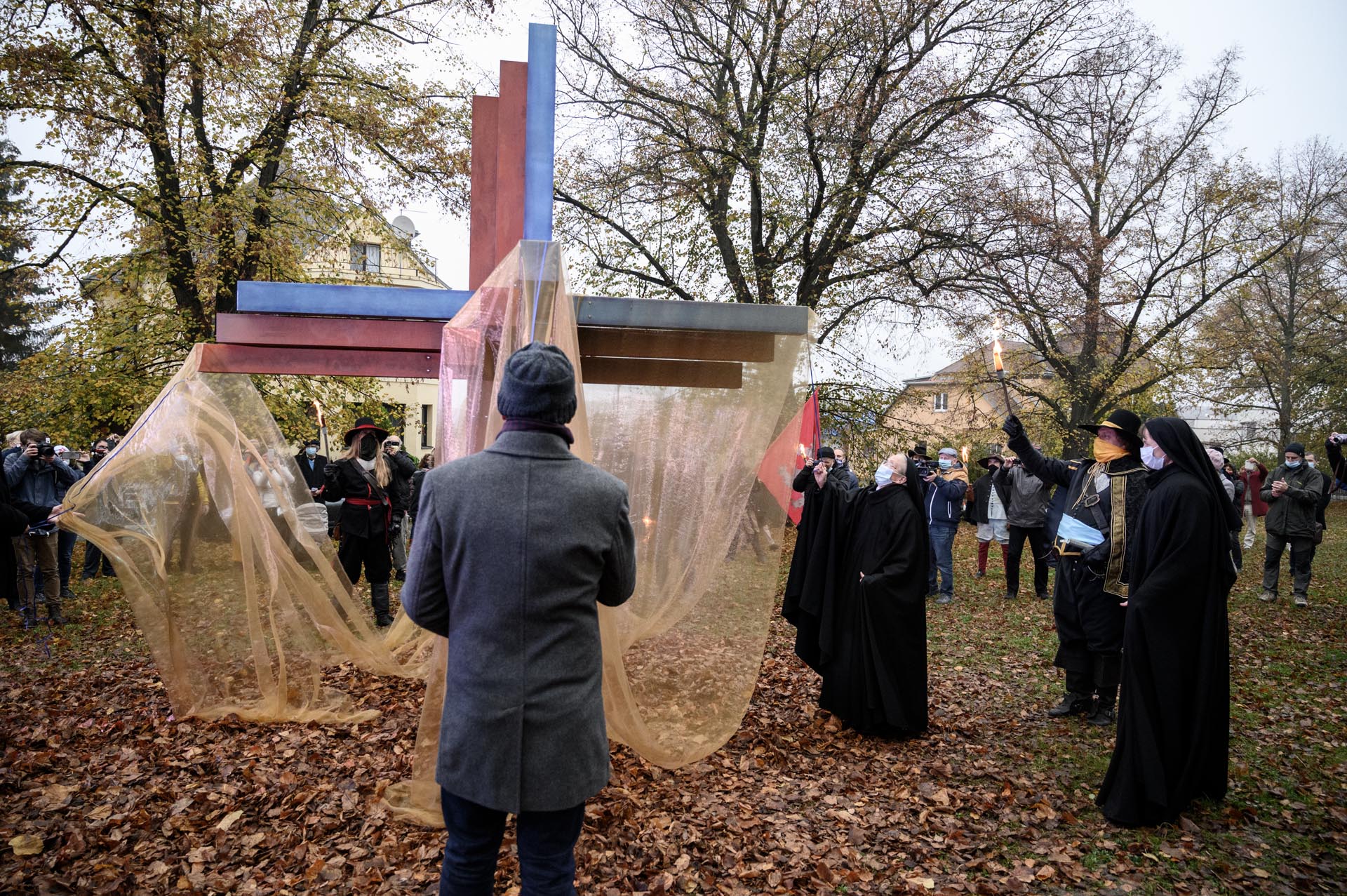
After two years of political and military struggle, the Estates’ troops clash with the Imperial troops, reinforced by the army led by Maximilian I, Elector of Bavaria, on the plain of Bílá Hora shortly after noon. The battle, not very significant in terms of duration and scale, has far-reaching consequences for the further development of Bohemia and the whole of Europe. In the months after the battle, the whole of Catholic Europe celebrates a surprising victory while the Protestant part of Europe tries to overcome its dismay and mobilises. The terrible Thirty Years’ War begins. It is a war with great financial and social consequences, the perception and interpretation of which changed in the following centuries depending on the times and social or political tendencies.
Litetarure:
- HOLUB, Bonifác Jan. Paměti farnosti u svaté Markéty v Břevnově a blízkého okolí. Praha: Benediktinské arciopatství sv. Vojtěcha a sv. Markéty, 2014. Pietas benedictina.
- CHALINE, Olivier. Bílá hora. Praha: Karolinum, 2013.
- KAVKA, František. Bílá hora a české dějiny. Praha: Garamond, 2003.
- PEKAŘ, Josef. Postavy a problémy českých dějin: Výbor z díla. 2. vyd. Praha: Vyšehrad, 1990.
- TEIGE, Josef, KUFFNER, Hanuš, HAJN, Antonín, HÝSEK, Miloslav, and WIRTH, Zdeněk. Na Bílé hoře. 2., přeprac. vyd. Praha: A. B. Černý, 1921.
- UHLÍŘ, Dušan. Černý den na Bílé hoře: 8. listopad 1620. Brno: Ave, 1998.
The Church
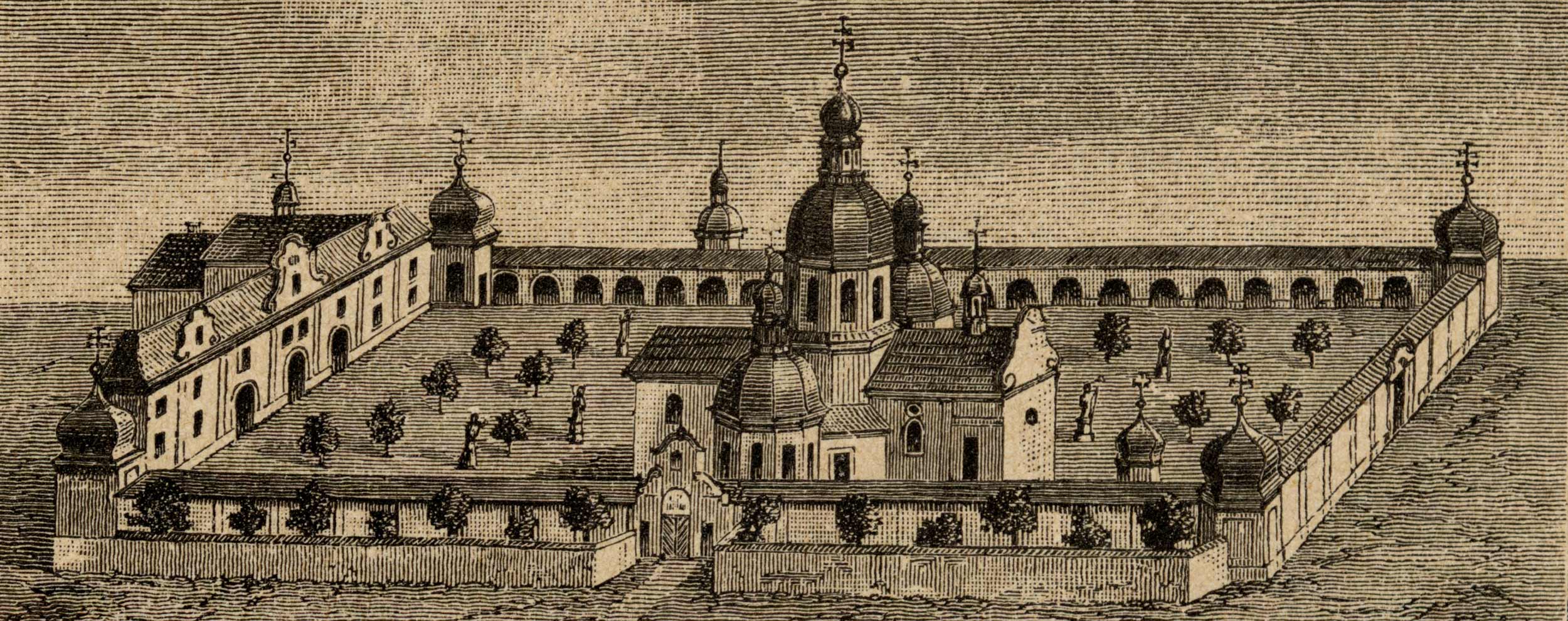
In 1622, Prague archbishop Johann Lohelius appealed to the faithful to collect money for building a chapel at Bílá Hora. On the anniversary of the battle in 1624 there is a procession going from St Vitus’s Cathedral in Prague right up to the chapel. Since then people from the area start coming here. During the Thirty Years’ War (1618–1648) the chapel is damaged by Swedish troops and later it is transformed into an ossuary. The processions are translated to the Carmelite Church of the same name, the Church of Saint Mary of Victory (today known as “Infant Jesus of Prague”). A Bavarian mason Michael Hagen starts to reconstruct the chapel at his own expense and serves as a sacristan here till the end of his days. However, Kristian Luna, a burgher of Hradčany, and Fraternity of Bílá Hora come soon and their plans are more ambitious. A presbytery is attached to the building and the chapel is dedicated to Saint Mary of Victory on 8 August 1706. A copy of so-called miraculous picture is made for the main altar in 1708. After that a sacristy with a belfry and side chapels are built due to which the church has now a cross ground plan. Nevertheless, complications arise during this construction work, that is why a famous architect Jan Blažej Santini is called upon. In 1714 the original dome is pulled down and a new, higher one is built. The style of his work is evident in the corner chapels as well. Paintings of the central dome are assigned to a renowned Bavarian painter Cosmas Damian Asam. Fotogalerie
Art history literature
- HORYNA, M., and NOVOSÁDOVÁ, O. Praha-Bílá hora: poutní kostel sv. Panny Marie Vítězné. Stavebně historický průzkum SÚRPMO, 1977.
- ROYT, Jan. Obraz a kult v Čechách 17. a 18. století. 2., dopl. a přeprac. vyd. Praha: Karolinum, 2011.
- VÁCHA, Štěpán: K původu a kultu milostného obrazu Panny Marie Vítězné ze Štěnovic. Minulostí Západočeského kraje / Plzeň : Albis International, 2010, s. 7–31.
Renovation
Since the building of the pilgrimage site between 1704 and 1735 there were no significant architectural changes. The site was completely repaired in 1811 when it was reopened. At this time the missing statues and furnishings were replenished. In the following years the usual necessary repairs that are well-documented (documents were discovered in the gilded ball of the cross on the central dome in 2017) were carried out. Due to inappropriate restoration interventions from the turn of the 19th and 20th century, some parts of the original wall paintings are lost.
After the Second World War the pilgrimage site and especially its roofs have fallen into disrepair. The roofs were renewed thanks to the long-time administrator Prof. Václav Bogner (partly with his own help) and in the 1970s and 1980s the entire courtyard underwent a complete overhaul. Prof. Mojmír Horyna also contributed significantly to the preservation of the place in its historical form.
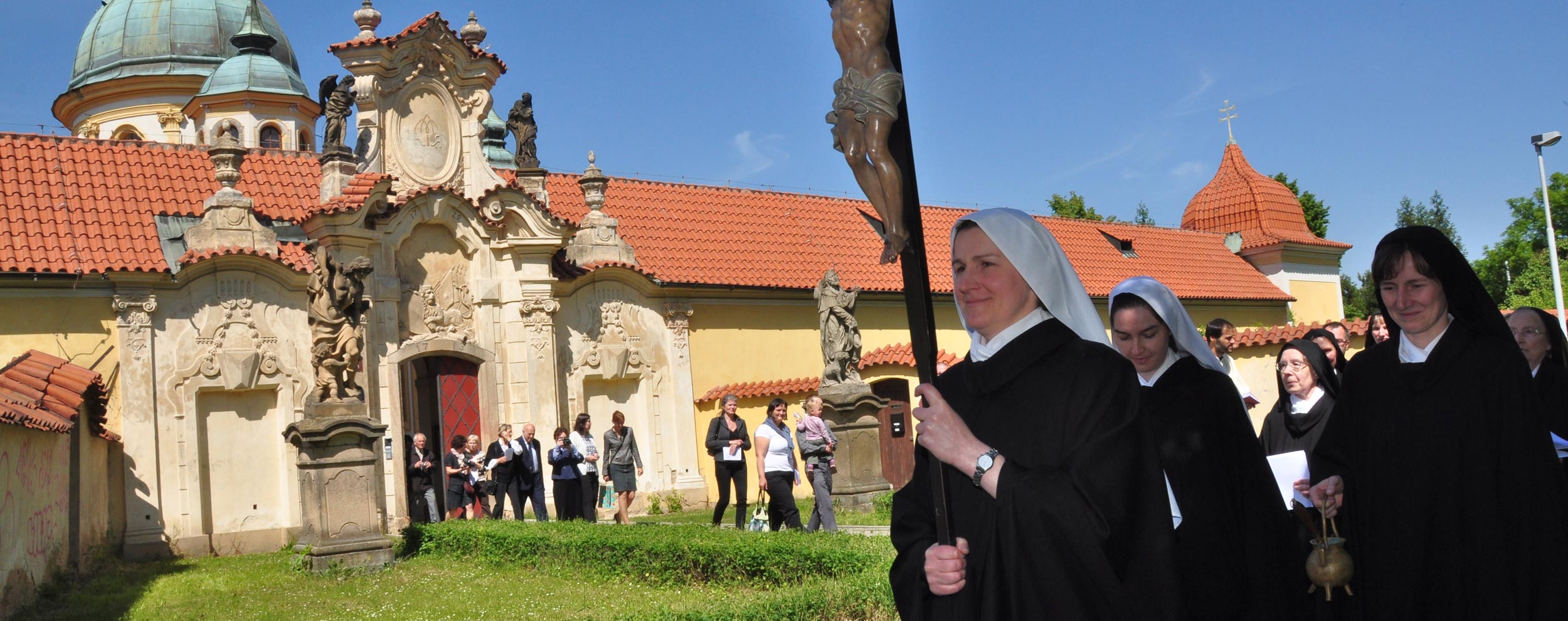
Between 2006 and 2013 the former parish house and adjacent buildings underwent complete rehabilitation and were adapted to the life of the convent community–Venio Abbey. A new house for the accommodation of sisters was built as well. Between 2015 and 2020 the church and courtyard, including the front gardens in front of the main pilgrimage site gate, were repaired.
In 2018 the pilgrimage site has been pronounced a “National Heritage Site”.